

The Human Algorithm: Leaders Making It Real | Tech with Intent | Part 6 of 8
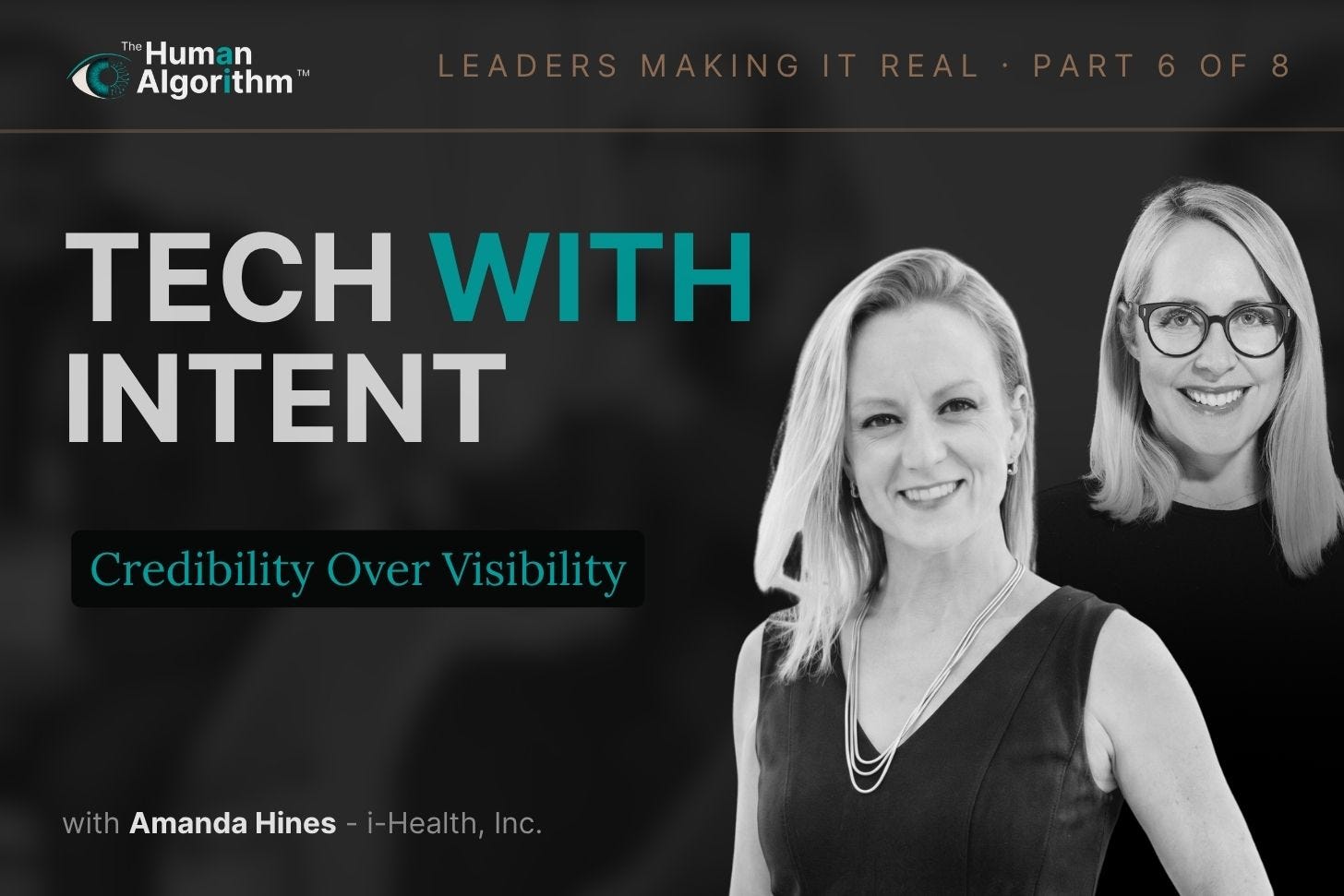
Credibility Over Visibility: Amanda Hines on why the AI that drives business is the AI customers never see.

AI will do whatever you point it at. The leaders pulling ahead are precise about where they aim it.
Chase the loudest opportunity and you get motion. Choose the right one and you get results. The difference is intent. That’s where the value lives.
This is Part 6 of The Human Algorithm: Leaders Making It Real, a look at how senior leaders are translating human-centered AI from concept into practice inside their organizations. We’re now in Round 2, revisiting each of the four drivers—Culture & Capability, Tech with Intent, Design for Humans, Trust as Infrastructure—with a new leader and a fresh angle.
In the last issue, Dr. Scott Snyder made the case that AI readiness is a leadership discipline, naming five elements leaders have to elevate to transform with AI.
Now we return to Tech with Intent. Where Vivek Chaudhri showed us how leadership decisions close the gap from AI pilot to value, our next guest directs AI at the consumer decisions that come before the campaign.
New here? Welcome. You can catch up on earlier editions by subscribing below.
Meet Amanda Hines
VP, Chief Marketing & Innovation Officer, i-Health, Inc. · Alumni Council, The Marketing Academy
Amanda Hines builds and grows the brands people reach for when their health gets personal. As VP, Chief Marketing & Innovation Officer for i-Health, Inc. in North America, she leads brand growth, media and digital strategy, and product innovation across a portfolio of category leaders—Culturelle in gut health, AZO and Estroven in women’s health. Marketing and innovation sit under her organization, which means consumer insight doesn’t just shape the message; it steers what reaches the shelf.
She spent her career across global consumer health leaders, including Sanofi Consumer Healthcare and Boehringer Ingelheim, consistently connecting consumer insight, science, and data to product innovation and commercial impact. She also invests in the leaders coming up behind her, as a member of The Marketing Academy’s Alumni Council.
For Amanda, the strongest growth doesn’t start with the campaign—it starts with understanding the consumer well enough to anticipate what they need next. In a category where credibility is the product, that comes first. The technology follows.
I asked Amanda how leaders can move beyond experimentation and start applying AI with genuine business intent. Here’s what she said.
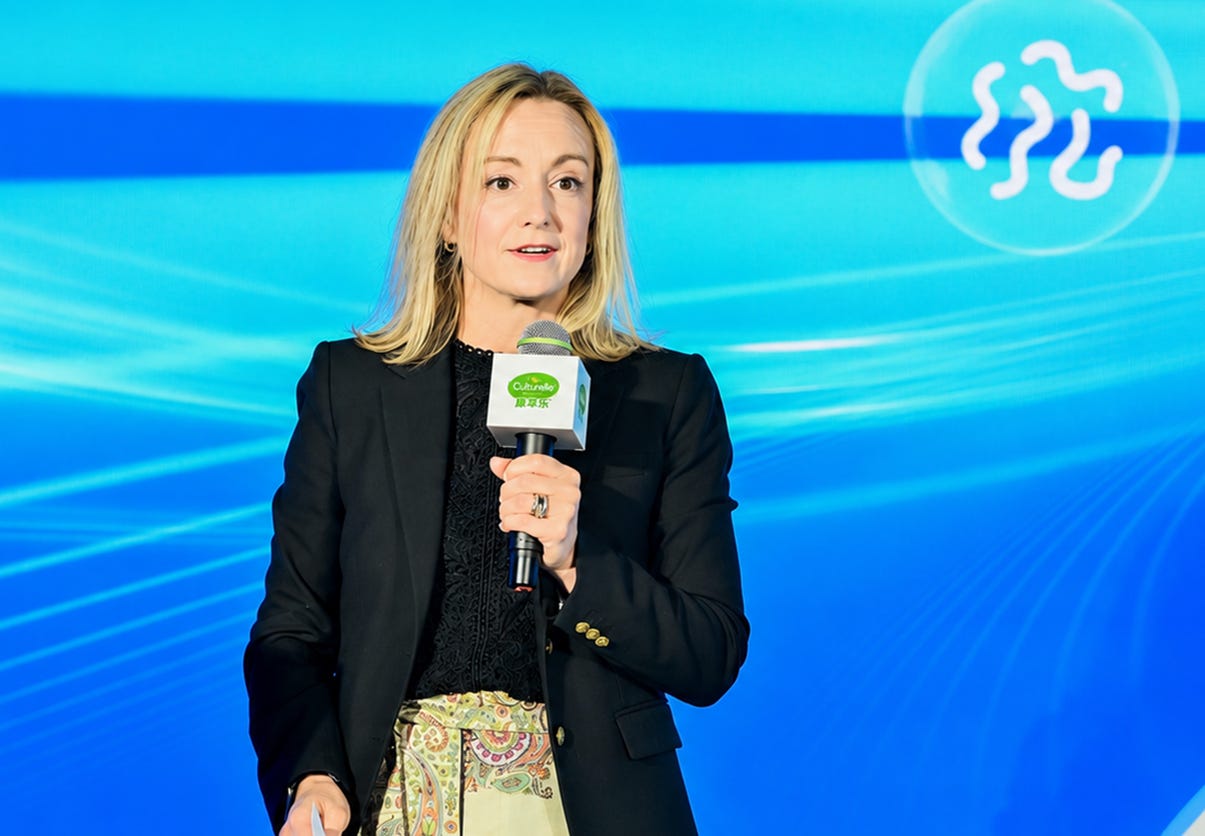
What's the biggest AI opportunity in consumer health most leaders are missing?
I see a significant opportunity to use AI to connect consumer signals directly to product and portfolio decisions, not just optimize marketing execution. While our teams continue to experiment and find efficiencies in areas like campaign development and content generation, we’re even more excited about using AI to synthesize fragmented inputs—reviews, search behavior, social conversations, and clinical evidence—into actionable insights for innovation and claims strategy.
We’re actively evaluating where AI should play across the full innovation lifecycle, from insight generation to ingredient evaluation and formulation, through to claims substantiation and regulatory compliance.
In consumer health, where needs are deeply personal and often under-expressed through traditional research, AI gives us a way to get ahead of the consumer—shifting from reacting to articulated needs to anticipating what’s coming next.
How do you bridge the gap from AI experimentation to impact?
In my experience, both personally and as a leader, the first barrier isn’t capability—it’s mindset. Teams start in a place of hesitation—“Is this going to replace me?”—and you have to move them to “this can make me exponentially better.” That shift alone is a critical foundation for any real impact. The bridge to business outcomes is making AI tangible, creating ownership and accountability inside the organization.
For us, that’s where things started to click this year. We established a cross-functional AI Council, not as a think tank, but as an ownership model. It was a submission-based process with overwhelming demand, and we intentionally built a group spanning Marketing, Sales, R&D, Finance, and Operations to reflect where the value sits. This is moving us from scattered experimentation to clear priorities, named owners, and defined outcomes tied to real business problems.
What does good AI application look like when tackling a brand or category challenge?
One example that stands out is how we’ve used consumer reviews, search, and social data to reshape how we think about symptoms and usage occasions in gut health and women’s health.
Historically, categories like probiotics or urinary health were marketed around broad functional benefits. But when we started systematically analyzing consumer language—across reviews, forums, and search—we saw much more specific, situational need states emerge. This is informing product architecture, claims and messaging, pack design, and innovation pipelines.
Consumer health sits where trust, regulation, and speed collide. How does that shape how you evaluate and roll out new technology?
In consumer health, the bar is fundamentally higher because credibility is the product. We pride ourselves on a commitment to science-backed solutions and ethical communication in line with clinical proof. So we're first evaluating technologies that strengthen internal decision support and speed to market, rather than those more directly visible to the consumer.
What’s the hardest decision you’ve faced when deploying innovation in a large organization?
The hardest decisions in pushing innovation forward are often about when to move fast and when to build alignment. In a matrixed organization, the instinct is to bring everyone along, but where knowledge or belief varies, this can mean a real slowdown in progress. In these cases, creating proof of concept and value is critical before driving alignment.
I saw this firsthand when standing up a new Data Science and Analytics capability. There was a lot of resistance—not just to the capability itself, but also a fear of disruption to existing processes, reporting, and analytical approaches. There were also concerns about moving too independently from broader organizational standards. Ultimately, we decided to move forward with a few focused, high-impact use cases. Instead of trying to align everything upfront, we built credibility through results. This created alignment based on tangible value and a desire for broader application.
To enable teams to drive results with AI, where should leaders start?
I would start with adoption and experimentation. What has been most powerful to watch is the moment individuals realize what AI can actually unlock for them, whether that's personal efficiency, broader "out-of-the-box" thinking, or faster access to market and competitive intelligence. Those small, individual breakthroughs are what build the momentum for much bigger, more impactful applications. But that doesn't happen organically. You have to role model it as a leader. When teams see leadership actively using AI, it gives them permission to bring it into their own work. It reframes AI from something questionable or "cutting corners" to something that raises the bar on thinking. AI accelerates the foundational work—analysis, synthesis, first drafts—so teams can spend more time on what really matters: judgment, strategy, and creativity.
“AI gives us a way to get ahead of the consumer—shifting from reacting to articulated needs to anticipating what's coming next.” —Amanda Hines
My take
Amanda is saying what the best brand marketers already know.
Campaign. Performance marketing. Content. This is execution. The final step. And today, it’s where most of the marketing dialogue lives.
Real marketing runs end to end. It drives innovation and brand strategy long before any of it goes live, with the human we serve at the center of every decision.
Walk into any closed-door CMO forum and you’ll hear the same consensus.
Harnessing AI in the highest-impact areas, like synthesizing fragmented insights and data to fuel that work, is a powerful advantage. Because increasing content volume without relevance is just filler.
It’s the competitive edge worth owning, and top executives like Amanda are already setting the pace.
Make the Human Algorithm real
Take one way you already use AI today.
Now focus it one step earlier, on the human you’re trying to reach.
Before the campaign, before the asset, use it to understand the person you’re designing for: what they search, what they struggle with, the need they haven’t put into words yet. Let that guide what you create and the choices you make, and everything afterward gets sharper on its own.
That’s intent: lead with the human, and what follows means something.
What’s next
This is Part 6 of The Human Algorithm: Leaders Making It Real.
In the next issue, we turn to Design for Humans, Deliver for Business, the driver that asks whether what we create fits the people it’s for. Because knowing where to focus AI is only half the work. What you develop still has to resonate with the human on the other end.
We can’t slow the pace of change, but we can be precise about where we apply it.
Tech with Intent reminds us that the technology is rarely the differentiator. The judgment behind it is.
Let’s build what’s next, with intent.
— Alyssa
The Human Algorithm is where I explore AI-enabled, human-centered growth for leaders building what’s next. Subscribe on Substack for the series and connect on LinkedIn to stay in the conversation.
Live & upcoming
Frontiers Health 2026: Berlin, Germany · October 20-21 · Masterclass: The Human Algorithm: Rewiring Commercial Engagement for Patient Outcomes

Register through the link above. Would love to see you there.