

Why We Need a Human Algorithm
The pace of change is relentless; our competitive edge is how human we remain.

Welcome to the very first issue of The Human Algorithm, a space for leaders navigating transformation in AI, digital, and marketing with a human‑centered lens. Every two weeks you’ll receive original essays, frameworks, and practical commentary designed to help you lead with clarity and context as the world accelerates. It’s for those who want to stay thoughtful without losing what matters.
The world is accelerating
Adoption of artificial intelligence isn’t coming—it’s here. A solid majority of U.S. adults use AI every day and nearly three‑quarters of professionals lean on AI tools in their work—often far more than leaders realize.
Yet only a small fraction of organizations consistently generate significant value from these tools. The result? Leaders feel pressure to keep up, employees experiment without guidance and customers form expectations faster than we can respond.
The paradox of progress
Technology can process more data than any human could ever read, but it can’t decide what matters. It can generate endless options but not purpose. It can mimic relationships yet not build trust.
Meanwhile the performance gap between digital leaders and laggards is widening, and public confidence in companies’ use of AI remains fragile. Momentum without meaning erodes trust.
The Human Algorithm
That’s why we need a different kind of algorithm—a Human Algorithm. It isn’t a software upgrade; it’s a leadership operating system that puts people first even as we embrace the power of machines. Where technology accelerates, the Human Algorithm anchors. Where information overwhelms, it filters and focuses. Where decision‑making freezes, it provides a rhythm that blends rigor with empathy.
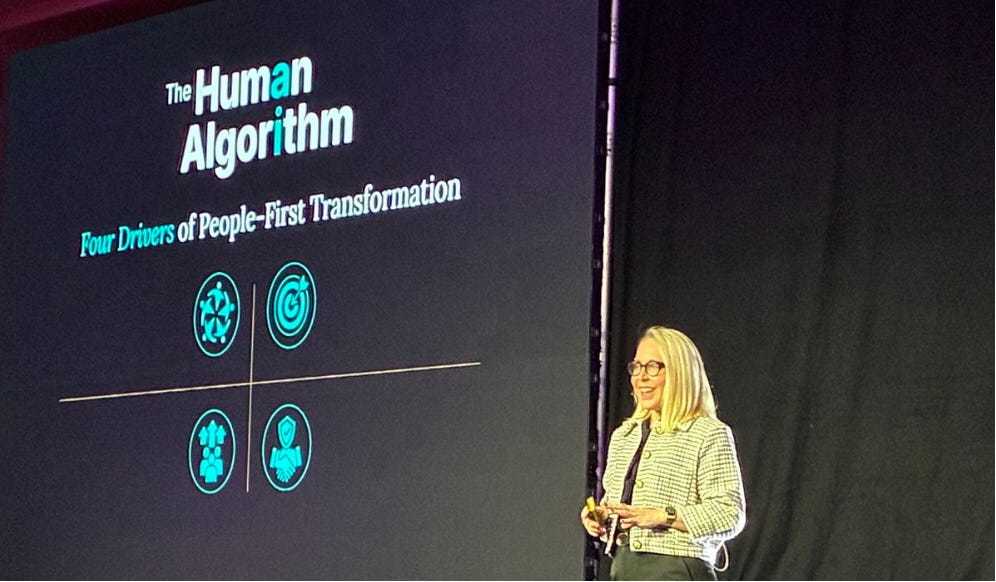
Four Drivers of People‑First Transformation
At the heart of the Human Algorithm are four drivers. These aren’t buzzwords; they’re the practical levers that high‑performing organizations are pulling to turn AI hype into sustainable advantage:
The best technology fails if people aren’t equipped or empowered. High‑performing companies invest more aggressively in building digital and AI skills across their workforce. Think of it as writing the code of your organization; until you upgrade it, you can’t run new programs.

Using AI purposefully means starting from a genuine problem, not from a shiny tool. The goal is to augment human judgement and create value, not to deploy AI for AI’s sake. When technology is applied with clear intent, it unlocks customer value and delivers business outcomes.
Experiences that delight users drive growth. Companies that lead in customer experience doubled their revenue growth versus laggards over five years, because they design products and services around human needs rather than internal metrics. If you wouldn’t personally enjoy using your own solutions, why should your customers?

Trust isn’t a marketing campaign; it’s built into how you operate. In a world where most people distrust companies’ use of AI, leaders must embed transparency, ethics and accountability from day one. When you make trust visible—through clear data practices, honest communication, and purpose‑driven choices—it becomes a moat competitors can’t easily cross.
These four drivers form an integrated system. Culture enables people to harness technology with intent. Purposeful technology delivers experiences that delight humans, which in turn fosters trust. Trust feeds back into culture as employees feel proud of the organization they belong to. Viewed together, they are the Human Algorithm—a framework for thriving when everything is moving faster than we are.
Make the Human Algorithm Real
Big frameworks are only valuable if they change what we do day to day. Rather than giving you a long list of tasks, let’s start simple: pick one AI or digital initiative you’re already working on—maybe a pilot, a marketing campaign, or a process redesign—and ask yourself a single question:
Are we making this more human‑centered, or just adding technology?
Commit to one small change this week that puts people at the center—simplify the user experience, clarify the problem you’re solving, or involve the people who will use the solution. Small adjustments like these build the reflexes that make the Human Algorithm second nature.
What’s next
Over the coming months we’ll unpack each driver in more detail. Future issues will explore how high performers build AI literacy at scale, why intent matters more than tools, how human‑centered design fuels growth and what it really takes to operationalize trust. Expect real‑world examples—from Johnson & Johnson’s investment in “bilingual” talent to Neutrogena’s democratization of skin‑health insights, Duolingo’s gamification breakthroughs, and Patagonia’s radical transparency—that show the Human Algorithm in action.
We can’t slow the pace of change, but we can choose how we respond to it. The Human Algorithm is about responding with clarity, creativity, and humanity. We’re in this together—building what’s next without losing what matters.
— Alyssa
Exploring how purpose‑driven leadership, marketing, digital, and AI shape what's next. If this sparked something for you, follow along or subscribe.
Connect with me on LinkedIn for more.
Amidst the big investment pouring into Ai, the ROI is still a blurr. I think this newsletter is going to shed light to this gap. Awesome work Alyssa 👏
Love this recommendation: "Commit to one small change this week that puts people at the center." Change doesn't have to happen all at once. In fact, trying to do so exponentially increases the likelihood for failure. Identifying just one thing makes it manageable and committing to weekly improvement builds momentum.