

Tech with Intent
How Mastercard’s Next-Gen AI Protects People—Not Just Payments

For those who know me, travel has always been a source of perspective and a reminder of how curiosity connects across cultures. Earlier this year, on a solo trip through Southeast Asia, I was exploring the markets of Luang Prabang—rows of local artisans, hand-dyed fabrics, and paintings that tell their own stories.
And then it happened—card declined. Then another. Different cards, same result.
In an instant, connection turned to frustration. Not because I’d done anything wrong, but because somewhere, an algorithm mistook curiosity for risk.
Moments like that remind me how easily technology can break trust—and how powerful it becomes when it protects it instead.
This issue continues with the second edition in our four-part series, The Human Algorithm in Action, showcasing real-world examples of how each of the four drivers—Culture & Capability, Tech with Intent, Design for Humans, and Trust as Infrastructure—architects value inside leading organizations.
After exploring Culture & Capability, we now move to Tech with Intent—where Mastercard demonstrates how technology isn’t speed for speed’s sake but solving real pain points for customers and the business.
If you missed the first edition in this series, you can catch-up by subscribing below.
Inside Mastercard’s AI for fraud prevention

Technology creates value when it solves risk without burdening the customer.
Fraud has become an arms race. Criminals now use sophisticated AI and even deepfakes to impersonate customers and exploit gaps in legacy systems. Banks respond by tightening rules, but that often results in legitimate transactions being mislabeled as suspicious and declined. The consequences are twofold: fraud losses keep climbing and customers endure needless friction.
When fraud evolves faster than the systems meant to stop it, the answer isn’t adding barriers—it’s applying technology to solve the problem without inconveniencing the customer. Mastercard’s next-generation Decision Intelligence Pro (DI Pro) illustrates how generative AI can protect consumers by spotting fraud in real time without punishing legitimate purchases.
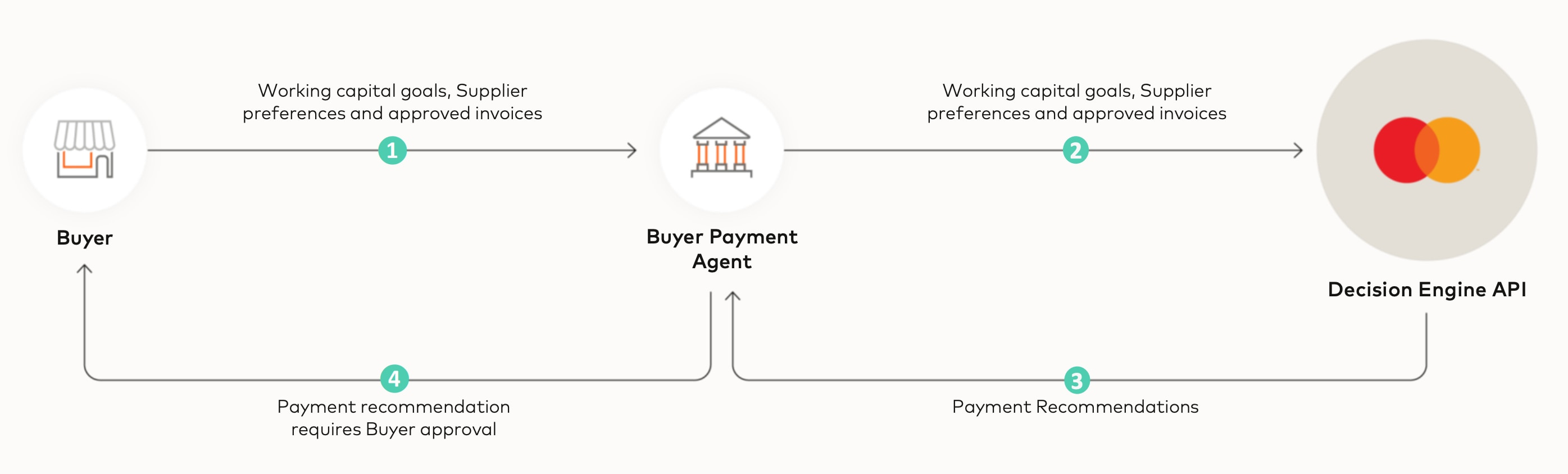
The scale is staggering. Mastercard’s legacy Decision Intelligence (DI) platform already evaluates and authorizes 143 billion transactions annually. DI Pro significantly expands that capability, scanning almost one trillion data points across account history, merchant details, device data, and customer behaviors. This intelligence is applied in line, as the transaction happens, with decisions made in under 125 milliseconds—fast enough to keep trusted transactions moving while stopping fraud before it reaches the customer.
And the impact?
Early estimates indicate about a 20% average increase in fraud detection, with improvements up to 300% in certain cases. For everyday consumers, that means criminals have a much harder time slipping through. At the same time, the technology is far more precise. Mastercard’s analysis shows that DI Pro can eliminate over 85% of false-positive declines, making those disruptive and embarrassing “card declined” moments much rarer.
If this technology had been working behind the scenes when I was browsing the shops in Luang Prabang, the system would have recognized my purchasing patterns within milliseconds, scanned those trillion data points and confidently approved my purchases.
False declines and slow approvals create costly friction for consumers and merchants. DI Pro demonstrates that AI can be used intentionally to solve a precise problem: keep money moving safely. By harnessing generative AI to understand context instead of relying on static rules, Mastercard reduces hassle for legitimate customers while stopping bad actors. It’s a purpose-built solution, not just an AI experiment.
The lesson for all of us: Mastercard’s approach shows what it means to build Tech with Intent. AI wasn’t designed to move faster for its own sake—it was built to make every transaction safer, more accurate, and more human.
Make the Human Algorithm real
To bring Tech with Intent to life, start with one question:
What is your technology really optimizing for—speed, or trust?
Look at one system or workflow in your own organization. Is it helping people feel more confident in the experience—or just processing them more efficiently?
Prioritize one area to strengthen trust and confidence for the humans who engage with it.
What’s next

Next time, we’ll explore Design for Humans, Deliver for Business—how one company reimagined customer experience by bringing empathy to every interface.
We can’t slow the pace of change, but we can decide how we use technology for good.
Tech with Intent reminds us that progress isn’t just about intelligence—it’s about intention.
Let’s build with purpose.
— Alyssa
Exploring how purpose‑driven leadership, marketing, digital, and AI shape what’s next. If this sparked something for you, follow along or subscribe.
Connect with me and The Human Algorithm Advisory on LinkedIn to continue the conversation.