

Tech with Intent
How Allergen Alert Makes Dining Safer

CES is loud. But the highest-stakes moments of the week rarely happen on the show floor.
They happen later—at dinner—when someone scans a menu and does the quiet math: Is this safe? Can I trust this kitchen? What happens if I’m wrong?
That’s what makes food allergies different from most health challenges. You don’t manage them once a day. You manage them in public, in real time, with incomplete information.
At CES 2026, AI was everywhere. And yet one of the most meaningful health innovations I saw was a reminder: AI is not the answer to every problem. Sometimes the most human-centered technology is the one that chooses certainty over prediction.
Because when the stakes are life-threatening, “close enough” isn’t helpful. It’s a risk.
Welcome back to The Human Algorithm: Signals from CES—a four-part series on the products that rise above the AI hype and what they reveal about building tech for real human problems and real business outcomes.
If you’ve been following along, you’ll recognize the framework. Every people-first system is shaped by four forces: Culture & Capability, Tech with Intent, Design for Humans, and Trust as Infrastructure.
Today we’re focused on Tech with Intent, and a CES 2026 startup called Allergen Alert—a pocket-size “mini lab” designed to detect gluten and milk allergens in minutes, right at the table.
If you missed The Human Algorithm in Action, you can catch up by subscribing below.
Inside the Signal: Allergen Alert’s Mini Lab
“Technology is a tool—not the starting point.”
Food allergies aren’t rare. About 6% of Europe is affected. Across the U.S., Canada, and Australia, it’s closer to 9%. And in the U.S., childhood food allergy prevalence has climbed roughly 50% in the last 15 years. Globally, that’s an estimated 250 million people living with the daily reality that one wrong ingredient can change everything.
And yet the hardest part isn’t the allergy itself.
It’s the uncertainty.
If you or your friends are raising children with celiac disease—or severe milk allergies—you’ve seen it: the mental arithmetic that runs silently in the background of every meal out. The scanning of menus. The careful questions. The quiet calculation of risk that turns a social dinner into a life-critical choice.
Even in an era of labeling laws and “allergy-aware” kitchens, a food allergy reaction still sends someone to the ER every ten seconds in the U.S.
The barrier isn’t awareness.
It’s the last mile of safety—what happens at the table, when you’re no longer reading labels. You’re relying on trust.
Allergen Alert begins here.
The company was born from a moment no parent forgets. CEO Bénédicte Astier began building the concept after her daughter experienced an anaphylactic shock in 2022. She didn’t set out to build a health gadget. She set out to add a protective layer—a fast, reliable way to help families enjoy meals with more confidence and less fear.
And that intent shows up in the design choices.
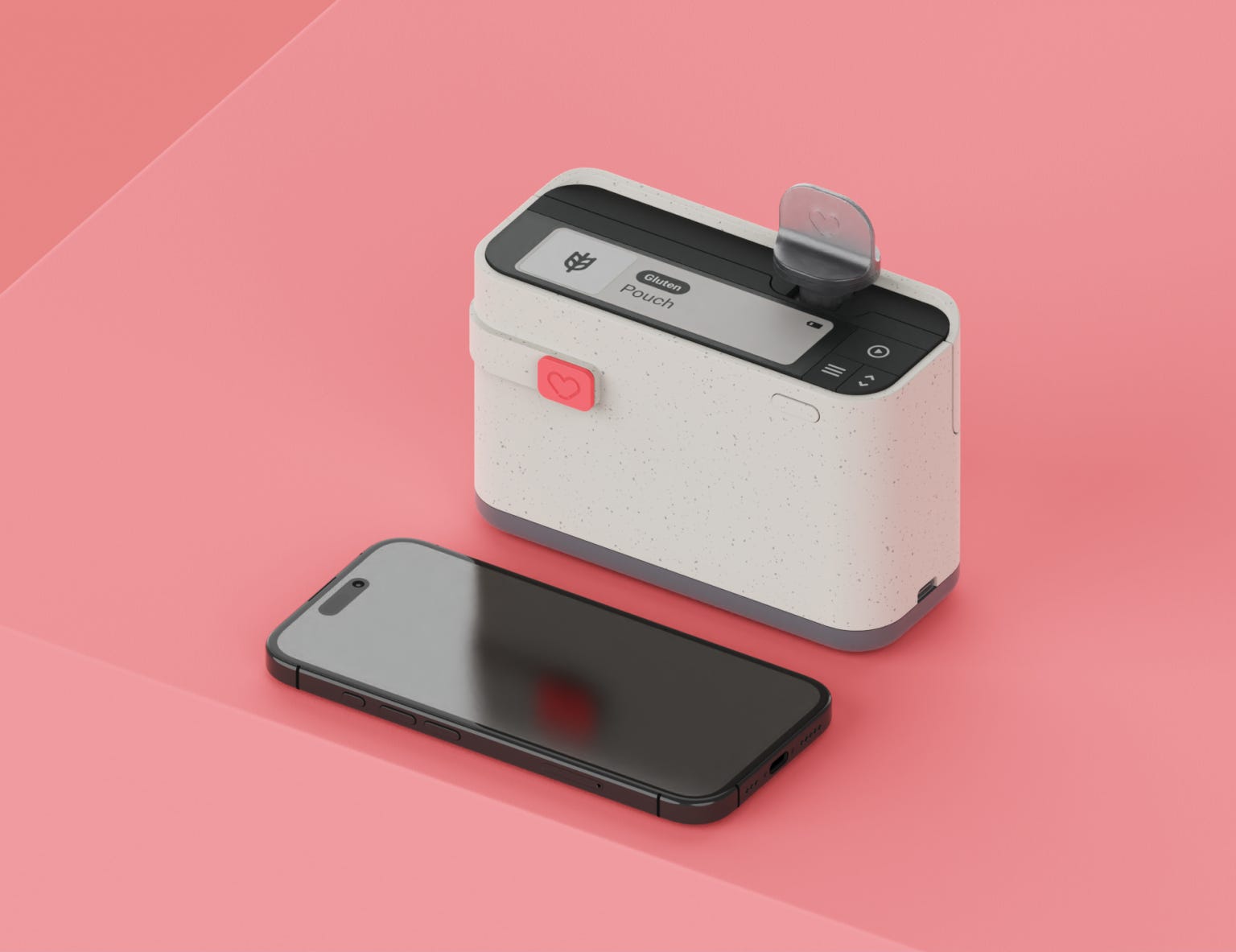
Allergen Alert isn’t a camera that “recognizes” food. It’s not an AI model trying to infer risk from a photo. It’s a pocket-sized laboratory built on real diagnostic science.
The core innovation is a patented, single-use pouch that automates and miniaturizes the lab work—sample preparation, extraction, dilution, migration, detection, and analysis—inside a sealed system. You take a small sample, seal it, dock it, and press a button. Two minutes later, you get a simple result: Not Detected or Detected—on the device, with a companion app that logs test history.
The digital layer isn’t there to overwhelm you with data. It’s there to translate a complex biochemical process into a decision you can act on in real time—without needing expertise or interpretation.
This is not AI as a feature. It’s technology and science as a safeguard.
Why It Matters
Allergen Alert was named Best Startup at the Official Best of CES 2026 Awards. That matters, not because awards guarantee adoption—but because it signals something important: the market is ready for health tech that reduces risk, not just tracks it. They’ve raised €3.6M to move toward commercialization, with plans for pre-orders at the end of 2026 at around $200, plus monthly pouch supplies.
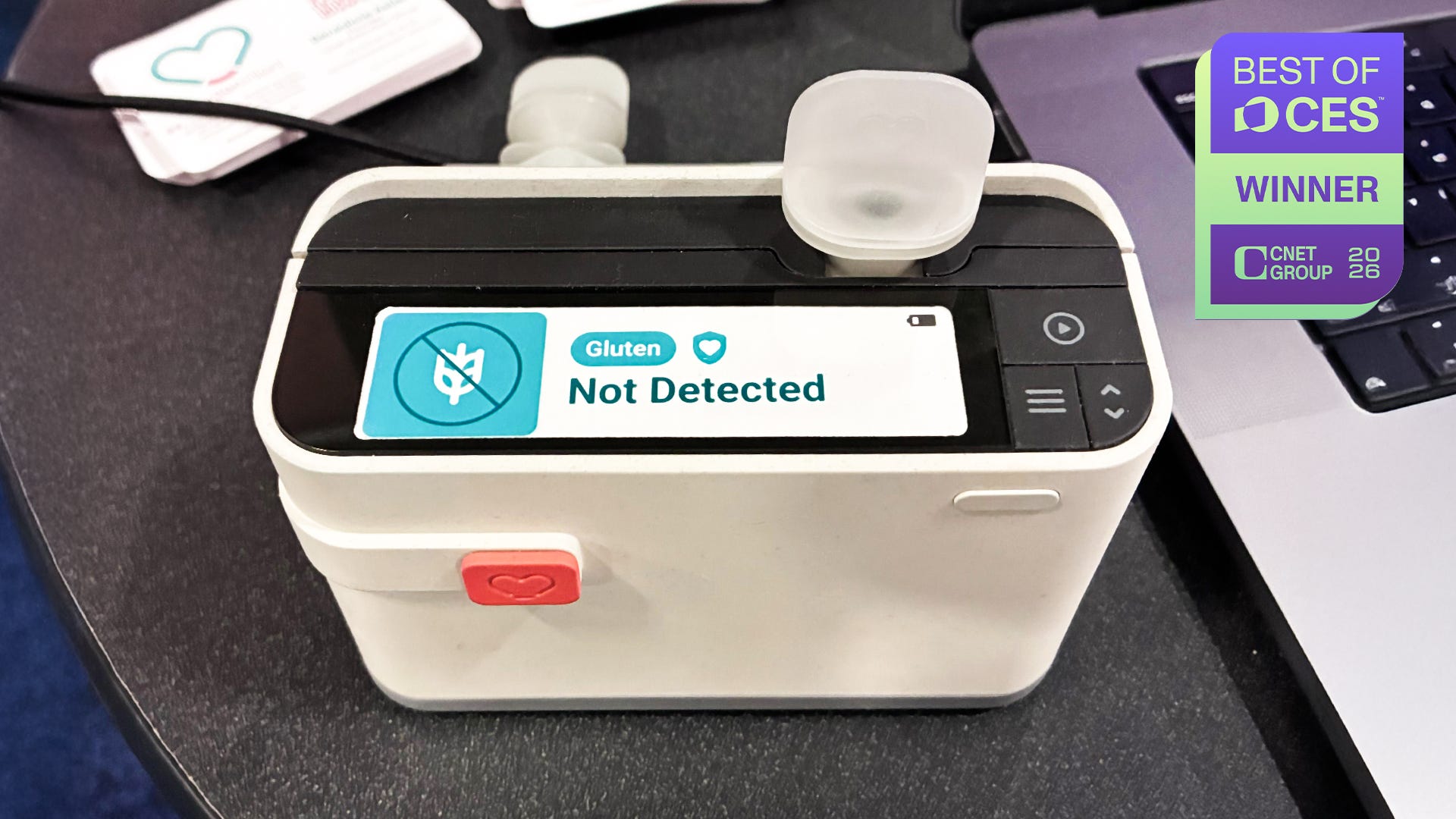
And the science performs. The company reports detection down to 4 ppm for gluten and 5 ppm for milk—well below the FDA’s 20 ppm threshold for gluten-free labeling.
But the real signal isn’t performance. It’s what it enables.
Most health tech today is passive. It monitors. It charts. It reports. Allergen Alert is built to change what happens next—so a normal dinner doesn’t have to feel like a calculated risk.
The lesson for all of us: People don’t crave more data. They crave solutions that lower the mental load and make life easier to navigate. Tech with intent isn’t louder. It’s more deliberate.
Make the Human Algorithm real
AI isn’t a strategy. Technology creates value fastest when it solves a real human or business problem that delivers measurable outcomes.
Pressure test one AI pilot you are leading or sponsoring with three questions:
What specific problem are we solving?
What other options did we seriously consider?
Why is AI the best fit—right now—for this use case?
If AI isn’t the best tool, don’t force it. Reconsider your approach and pick the simplest, most effective method to resolve it.
Allergen Alert is the reminder that the breakthrough wasn’t “more AI.” It was technology and science designed to remove uncertainty in real time.
The leadership habit: make these questions your gate—before the next pilot, platform, or budget cycle.
What’s next
This is Part 2 of The Human Algorithm: Signals from CES.
In the next issue, we’ll explore Design for Humans, Deliver for Business through a category-defining new launch—revealing why longevity is everywhere, and where real value gets created.
We can’t slow the pace of change, but we can choose the intent that guides it.
Let’s shape what’s next, together.
— Alyssa
Join me at The Human Algorithm to explore AI-enabled, human-centered growth. Subscribe on Substack for the series or visit the website for deeper insights.